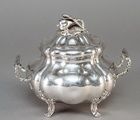
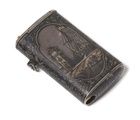
Here is the translation of your text into English: What Antique Spoons of Moscow Keep Silent About
Here is the translation of your text into English: ---
A Keyhole to Another World
Have you ever wondered why, upon seeing a tarnished silver spoon at a flea market, we are suddenly seized by an inexplicable excitement?
What magic lies hidden in an object that has been touched by countless unknown hands and lips?
Silver, at first glance, is just a metal, but in a battered teaspoon, entire books of human destinies, celebrations, and dramas come alive. Few suspect: an old set of Moscow silverware encodes within itself the storms of change, the tastes of generations, fashion, and the rebellion of an era.
If you read on, from now on you will see in a modest fork not just a utilitarian thing, but a piece of living history. The backstage of luxury, inventiveness, and passion that once boiled around Moscow tables will open to you.
Get ready: silver will speak.
---
I. When a Spoon Becomes a Clue to the Times
Let’s take a leap through time. Moscow, the mid-18th century: a city still dangling on threads of old faith, suddenly fills with the murmur of change. Peter I, the great reformer, sets the wheel of new customs and habits in motion. His decree: forget the old wooden spoon, do it “the European way!”
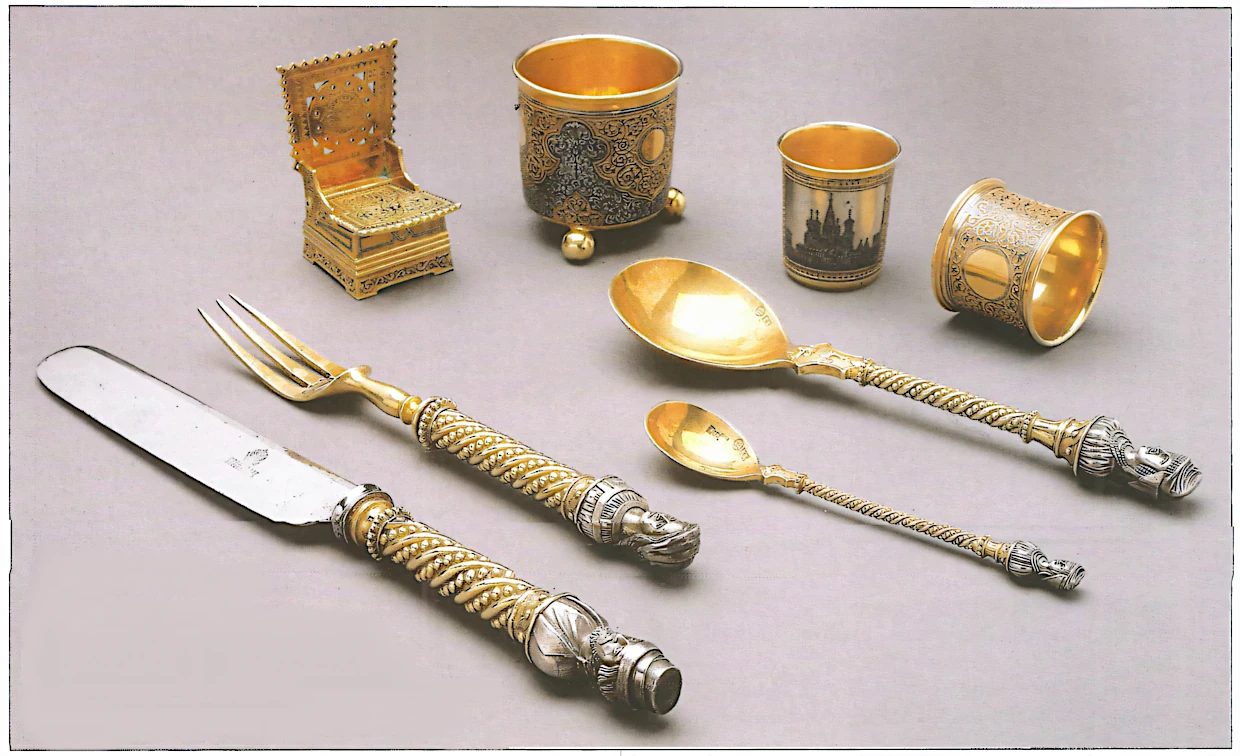
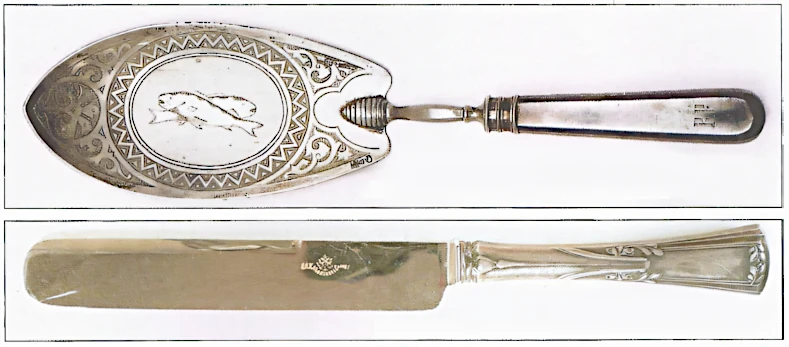
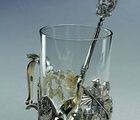
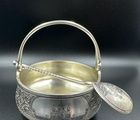
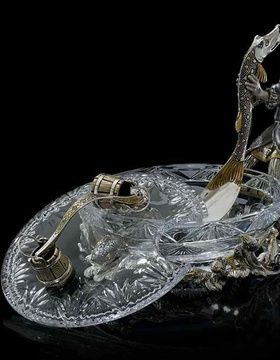
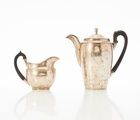
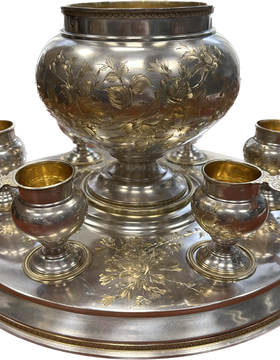
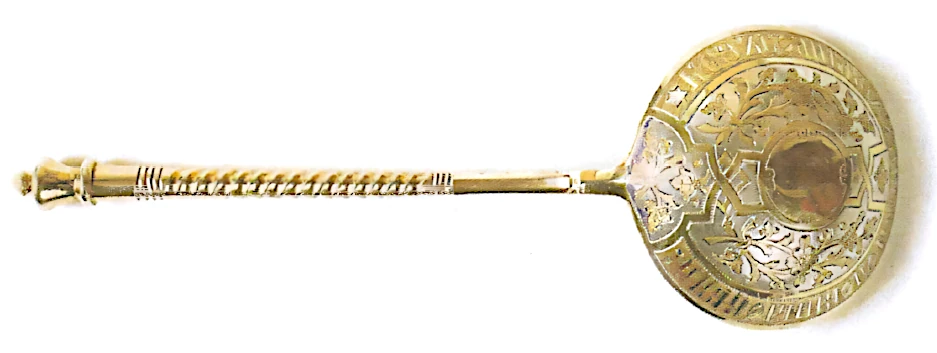
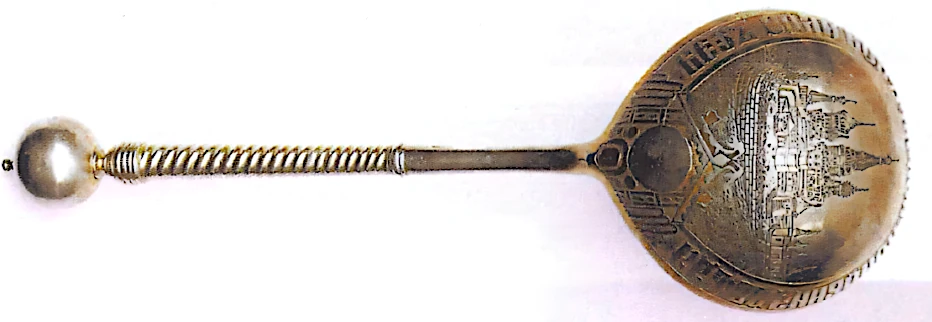
Salad spoon. Moscow, 1875. Firm of I. P. Khlebnikov. State Historical and Cultural Museum-Reserve "Moscow Kremlin".Dessert spoon. Moscow, 1881. Firm of I. P. Khlebnikov. Silver; casting, engraving. Private collection.Salad spoon. Moscow, 1880s. Firm of I. P. Khlebnikov. Silver; casting, engraving, gilding. State Historical and Cultural Museum-Reserve "Moscow Kremlin".II. The Gold of Taste Cast in Silver: The Khlebnikov Firm and Its Magic There was a city, there was an era—but personalities were needed for metallic coldness to turn into a living legend. Meet Ivan Petrovich Khlebnikov. His firm...Certainly! Here is your text translated into English: --- For half a century, it became a symbol of quality, generous talent, and the boldest taste in Russian silverware of the second half of the 19th — early 20th century.Travel Set. Moscow, 1874–1875. I.P. Khlebnikov Firm, V. Semenov Factory. Silver; casting, chasing, niello, “kanfarenie” (texturing), gilding. GEMK “Moscow Kremlin.”It is important here to sense the atmosphere: an enormous factory, where the air whistles, the blows of the chaser ring out, and the delicate clinking of tiny hammers on silver can be heard. The enamel artist is bent over a tiny masterpiece, the casting master has crafted a new precious pattern. Simple, mass-produced objects, almost without decoration, are models of Russian restraint. But just look closely! Beneath the smooth surface — precision taken to perfection, an almost mystical purity of form. Chasing, casting, enamel, niello — the techniques do not hide from each other, but intertwine, like threads in a Russian sarafan. And every Khlebnikov item is at once a tribute to tradition and a challenge to new fashion. In the “Russian style,” the sculpted figures on the handles — a woman in a sarafan with beads or a bearded man in a traditional shirt — greet you as warmly as portraits in an old family photograph. Take a look at the travel set, commissioned by merchant Saveliev for his future son-in-law, officer Vasilchikov. Is it merely tableware? No, it is a message of loyalty and status, of a family dream sealed in the shine of silver.Fish Server. Moscow, 1874. I.P. Khlebnikov Firm. Silver; casting, engraving. GEMK “Moscow Kremlin.” Table Knife, Moscow, 1908–1917. I.P. Khlebnikov Firm. Silver; casting. Private collection.How many secrets could each set whisper! Any monogram, engraving — a personal...Here is your translation into English: --- A touch: "This is ours, irreplaceable, meant only for this family…" Silver gracefully fuses warm domestic intimacy with the solemn pageantry of Imperial Russia. --- **III. The Silver Palette: From Hidden Meaning to Innovation** In silverware, more than in any other object of Russian daily life, the entire palette of styles is reflected—from imitation of the West to audacious declarations of the uniquely Russian. Here are spoons and forks—their handles crowned by male or female figurines, like miniature sculptures; and travel sets, a hundred years ago, were nearly status accessories, just like expensive iPhones today. **[Image: Punch Set. Bowl, Ladle, Glasses. Moscow, 1908–1917. I.P. Khlebnikov firm, Silver; casting, engraving. Private collection.]** Every dent in a cup, every twisted curve of a handle is not just fashion, but also a clue for the curious gaze: what did that time value? How did the country see itself—through niello, through enamel, through the whimsical cuts of ornament? Salt cellars, spatulas, fish knives or pie servers—how subtle and inventive Russian craftsmen were in answering the call of new, never-before-seen dishes and fashions. Colorful gilding, carved leaves and buds (oh, that Art Nouveau!), monograms, sayings engraved on spoon handles—it’s as if the secret of family happiness and the gentle irony of the age are encrypted in these lines and curls: “Our ancestors ate and drank simply, lived to a hundred years old…” **[Image: Dining Set. Moscow, 1880s. V. Semenov Factory. Silver; casting, niello, kanfarenie, gilding. State Historical and Cultural Museum Preserve "The Moscow Kremlin".]** Look closely: the paradox of time repeats itself. What was routine and utilitarian for some, a century later becomes an object of desire and collecting—a key...Here is your translated text: --- ...to family and national memory. It's like finding your grandmother's spoon with a barely visible monogram and suddenly opening an entire forgotten album of the past. --- IV. Silver as a Mirror: Prices, Symbols, and Modern Meanings Interestingly, silverware by Moscow firms—especially those renowned for their craftsmen, like Khlebnikov, Fabergé, and Morozov—has never gone out of fashion. People collect it and pay good money for it (particularly for complete sets in their original leather-covered, velvet-lined boxes—the boxes, by the way, are valued no less than the silver itself!). It's no wonder that even an empty case still holds the aura of a prestigious past. Here, once again, the magic of details comes into play: a set for six or twelve persons, without someone else's monograms, is a collector's dream. Individual pieces cost less, and mismatched spoons and knives have a tough fate: they await either the pawnshop or a new life after being melted down. --- [Jelly dish with 12 spoons. Moscow, 1880s. V. Semyonov Factory. Silver; casting, niello, stippling, gilding. GIKMZ “Moscow Kremlin.”] --- But it’s not just about money or rarity. Every time we look at silver from a famous firm, we see not just an 'eating utensil'—we touch an entire stratum of culture, a peculiar blend of openness to new trends and a zealous preservation of national character. Even today, top designers—drawing inspiration from the shapes and decor of Russian silver—create their own minimalist or, on the contrary, ornate pieces. The fashion for “purity of form” and precision of execution is just as relevant in the 21st century as it was for the craftsmen of Khlebnikov or Semyonov a century and a half ago. --- So what is it we hold in our hands when we pick up an old silver spoon or knife? It is more than just an object for eating. It is a journey...Here is the English translation of your text: --- in time—a dialogue with generations and an artistic autograph of a bygone era. Silver is a mirror that reflects not only style, but also character and passion—those very episodes of human life when dreams were born at the table, marriages were made, deals were struck, and perhaps secret vows were spoken. The thought that each spoon was once used to eat, to celebrate, to mourn, that it was gifted to someone and kept by someone as a treasure—this gives everything a special, fragile glow. And now—what would you compare your tea spoons to? What matters more to you: their “metallic” usefulness, or the mystery of how many feelings and stories they have absorbed over their long and happy life? And perhaps, at your own kitchen table, that very silver trace of memory is being born? What object in your home keeps its own secret?
Auction of works of art and antiques art-picture.ru provides the opportunity to purchase
purchase lots on the topic are presented "Here is the translation of your text into English: What Antique Spoons of Moscow Keep Silent About"
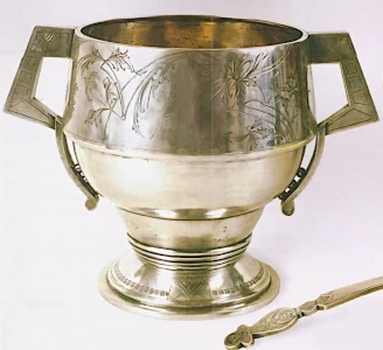 Here is the translation of your text into English: ---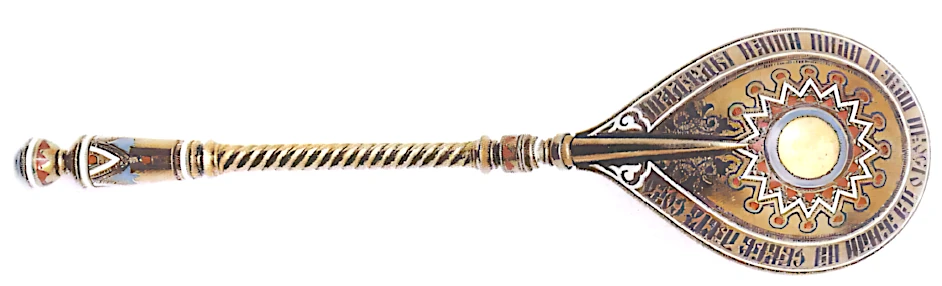
 II. The Gold of Taste Cast in Silver: The Khlebnikov Firm and Its Magic There was a city, there was an era—but personalities were needed for metallic coldness to turn into a living legend. Meet Ivan Petrovich Khlebnikov. His firm...Certainly! Here is your text translated into English: --- For half a century, it became a symbol of quality, generous talent, and the boldest taste in Russian silverware of the second half of the 19th — early 20th century.