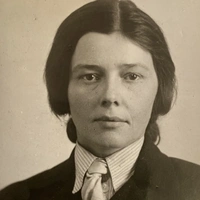
Valentina Vasilyevna Danilova (1906-1998) was a graphic artist. She studied at the Tbilisi Academy of Arts under E.E. Lansere and I.A. Sharleman. She was a member of the Union of Artists of the USSR.
DANILOVA Valentina Vasilyevna (September 14, 1906 – June 17, 1998) was a graphic artist and ex libris artist. Valentina Vasilyevna Danilova was born in Saint Petersburg. Her father, a military engineer, participated in the construction of the Military-Georgian road and passed away in 1919 due to a severe typhus epidemic. After becoming widowed, Valentina and her mother unexpectedly found themselves in Sukhumi and took advantage of the hospitality of Alexei Evdokimovich Dmitriev, where they lived for many years. Here, she spent her childhood and youth. When it came time to choose a profession, the grown-up Valentina struggled for a long time to decide whether to pursue architecture or art, ultimately selecting the latter.
She studied in Tbilisi—in the art studios of B.A. Vogel and M.I. Toidze (1920s), and at the Tbilisi Academy of Arts (1928-1931) under E.E. Lansere and I.A. Sharleman.
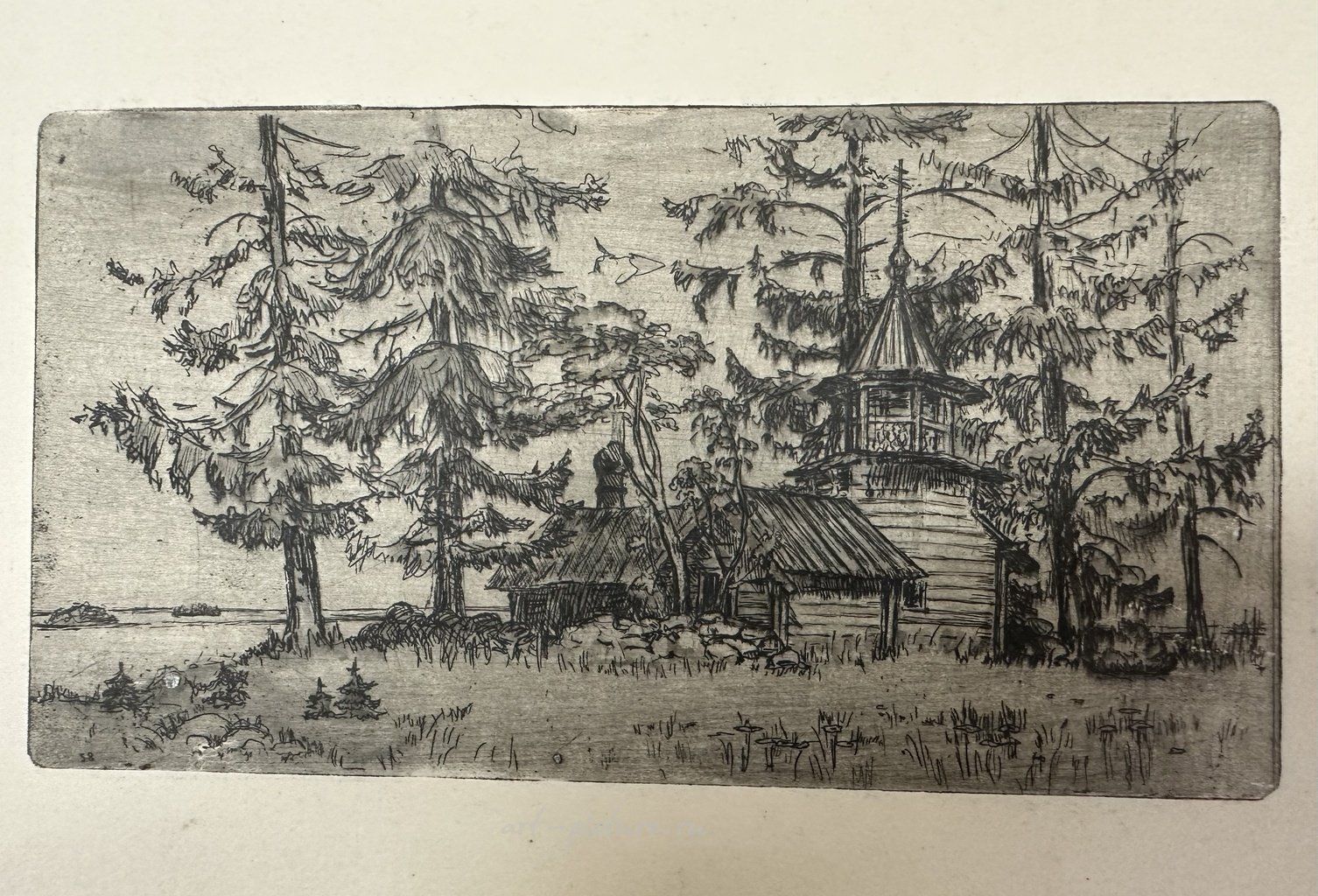
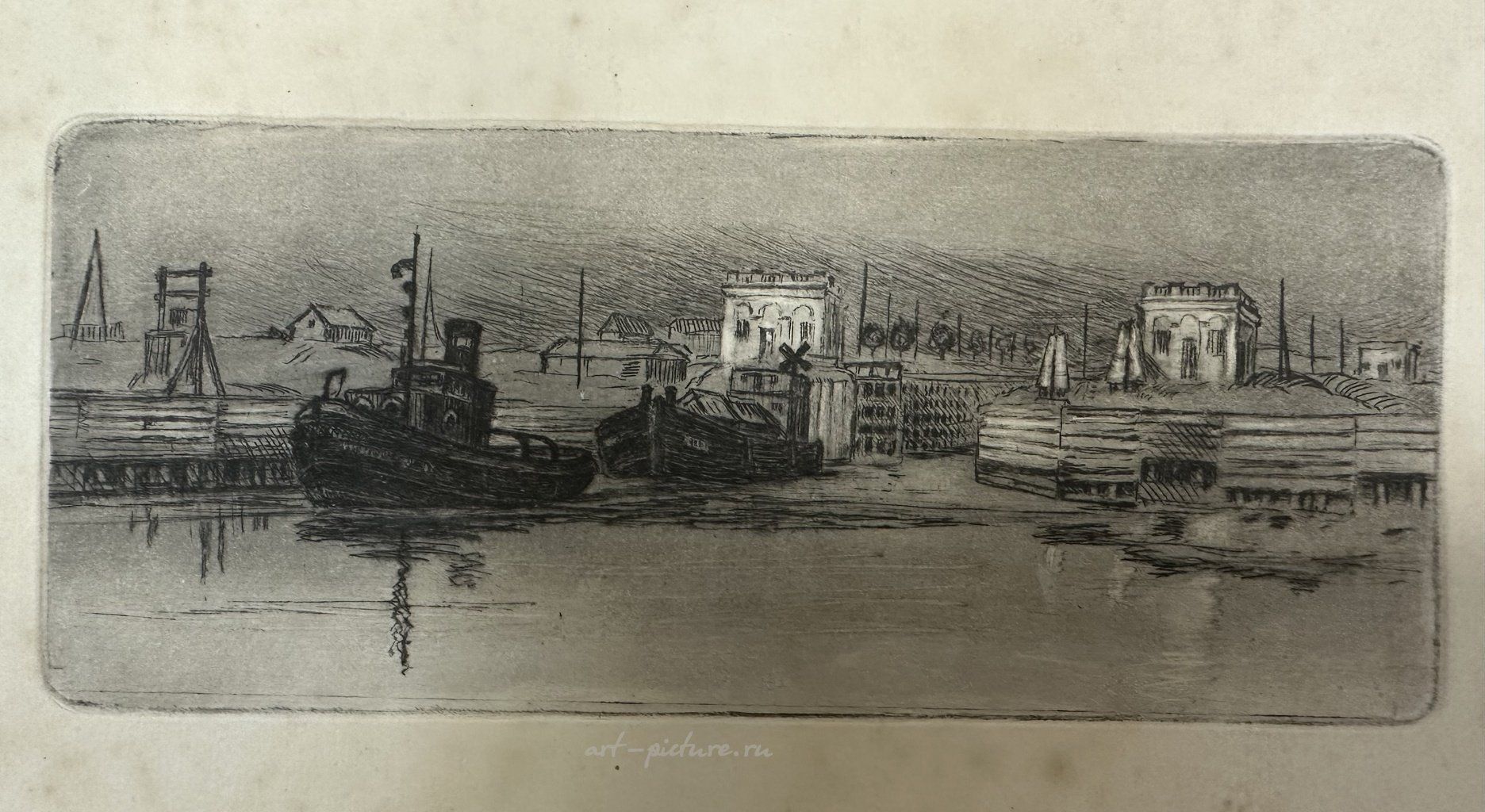
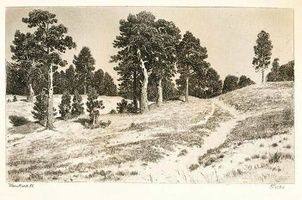
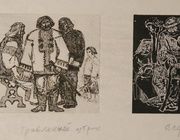
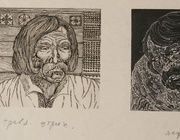
She lived in Moscow and was married to the graphic artist A.O. Dmitriev. She primarily worked in the etching technique; she was a landscape artist, an author of thematic compositions, and created ex libris designs. She was the author of several series of engravings: “Novodevichy Convent” (1942-1946), “Museum of Fine Arts” (1948), “House on Nikitskaya” (1949), “Kyrgyz Suite” (1955-1957, in collaboration with A.O. Dmitriev); individual works (co-authored with A.O. Dmitriev): “Gogol Reads the Comedy ‘The Government Inspector’ to the Artists of the Maly Theatre” (1951-1952), “Artist P.A. Fedotov in Moscow” (1952-1953), “Chernychevsky in Exile among Revolutionaries” (1962), “Gorky and Romain Rolland” (1963).
In the mid-1970s, after retirement, Valentina Vasilyevna, together with her husband, participated for many years in the work of improving the art department of the Solikamsk Local History Museum. They donated more than three hundred of their best works to it. “For her contribution to the creation of the museum’s art fund and her active role in the aesthetic education of the workers of Solikamsk,” Valentina Vasilyevna and Oleg Alekseevich were awarded the title of Honorary Citizen of Solikamsk by the city administration.
The artist's works are in the collections of: - The State Historical Museum (Moscow); - The State Museum and Exhibition Center "ROSIZO" (Moscow); - The State Memorial Historical, Literary, and Natural-Landscape Museum-Reserve A.S. Pushkin "Mikhailovskoye"; - The State Vladimir-Suzdal Historical, Architectural, and Artistic Museum-Reserve (Vladimir); - The Berezniki Historical and Art Museum named after I.F. Konovalov; - The Krasnodar Regional Art Museum named after F.A. Kovalenko; - The Ulyanovsk Regional Art Museum; - The Solikamsk Local History Museum; - The Yaroslavl Art Museum...
Ваше описание картины действительно погружает в атмосферу исторической глубины и романтики. Как эколог, не могу не отметить, что выбор материалов и технологий, используемых в данном произведении искусства, также имеет важное значение с точки зрения устойчивости и воздействия на окружающую среду. Техника офорта, как вы упомянули, предполагает использование медной пластины и химикатов для гравировки. Это может вызывать определенные экологические опасения из-за возможного воздействия химикатов на окружающую среду. Тем не менее, современное искусство активно используется альтернативные методы и экологически безопасные химикаты, что позволяет минимизировать вредное воздействие на природу.
Что касается архитектурного аспекта, изображённая крепость, как символ устойчивости и надежды, действительно вызывает чувства, подобные тем, что испытывают многие, кто знает историю и значение таких строений. Они служили не только архитектурными объектами, но и важными сообществами, которые способствовали социальной и культурной динамике. Однако, с экологической точки зрения, подобные сооружения часто также оказывают давление на природные ресурсы. Важно помнить, что долгосрочная устойчивость подразумевает не только сохранение культурного наследия, но и бережное отношение к природным экосистемам.
Деревья, описанные вами на переднем плане, являются важным элементом экосистемы. Их присутствие не только добавляет эстетическую ценность изображению, но и акцентирует внимание на роли растительности в поддержании биоразнообразия. Это также служит напоминанием о том, что подобные природные элементы должны защищаться и сохраняться. Я всегда восхищаюсь тем, как природа гармонично вписывается в произведения искусства, создавая уникальные опыты для наблюдателей.
Ваше упоминание о меланхолии и затишье, пронизывающее всю работу, открывает интересные размышления о времени и его влиянии на окружающую среду. Не только стены крепости, но и деревья рассказывают историю — каждое из этих существ имеет свой жизненный цикл и значение в контексте изменения окружающей среды.
Частично заметные недостатки, которые могли бы быть упомянуты критиками, также актуальны. Например, статичность изображения действительно может привести к изоляции зрителя от динамики природного мира. Однако такая тишина и загадка вносят свои нюансы; они позволяют задуматься о времени, проходящем настолько быстро, что мы порой забываем о жизненных циклах, которые происходят вокруг нас.
Как эколог, я рекомендую учитывать, как данное произведение искусства может служить инструментом для просвещения о важности защиты окружающей среды. Создание искусства должно идти рука об руку с заботой о природе — это может включать использование переработанных материалов, устойчивых методов или даже вовлеченность в проекты сохранения.
Искусство как таковое действительно может вдохновлять, и такие произведения, как представленное вами, должны служить мотивацией для нас, чтобы мы продолжали исследовать, воспринимать и заботиться о нашем мире. Они напоминают нам, что каждое наше взаимодействие с окружающей природой формирует новую историю, и это достойно внимания и уважения.
lI***fa Jan. 17, 2026 13:20
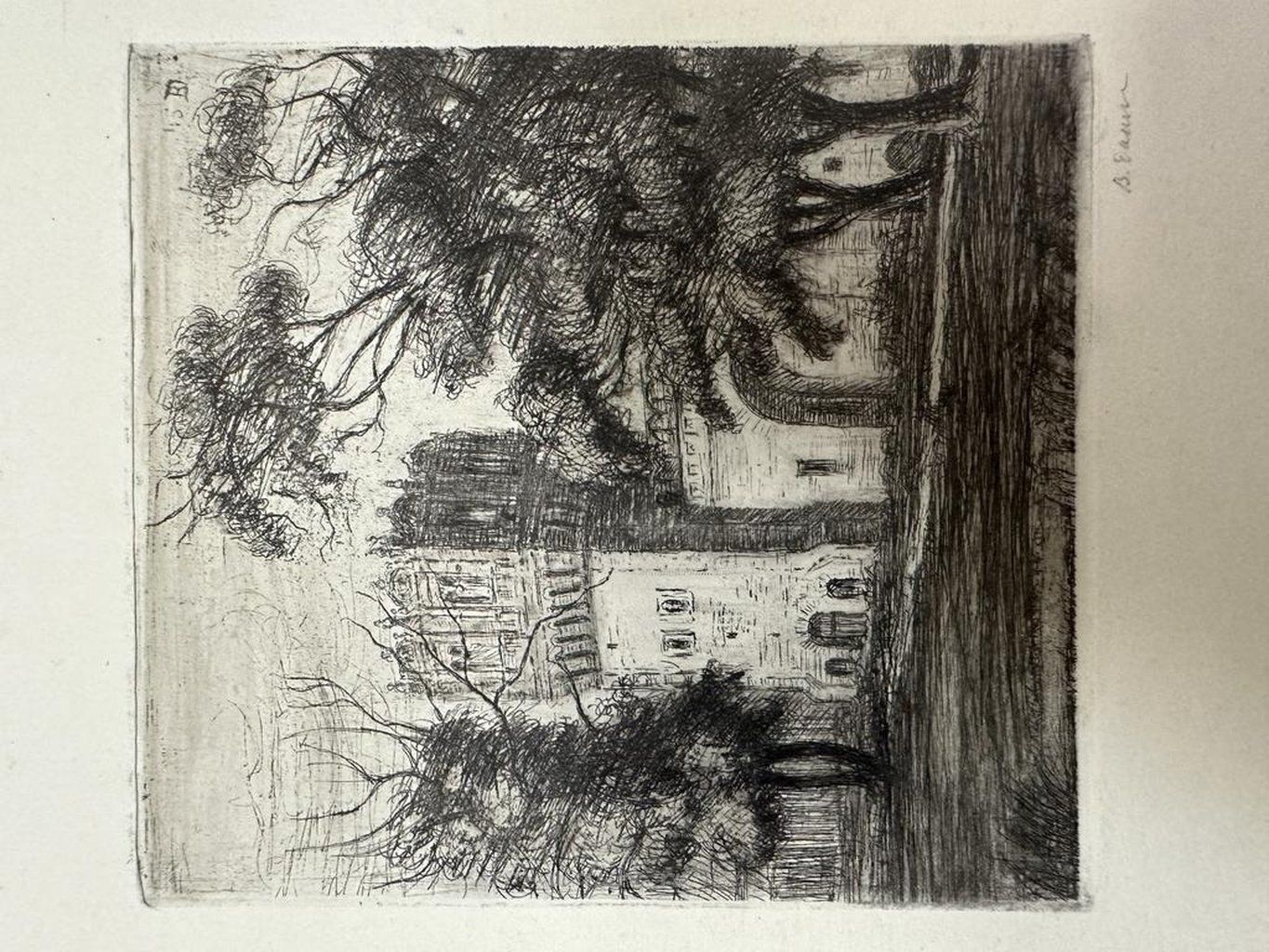
С уже упомянутой картиной, изображающей массивные крепостные стены, окруженные роскошными деревьями с ветвистыми кронами, действительно трудно не восхититься величием и глубиной её исполнения. Созданная в технике офорта, работа пленяет своим реализованным мастерством, позволяющим зрителю печатать на внутреннем взоре не только саму архитектурную форму крепости, но и всю атмосферу старинного времени, включающую в себя легкий налёт романтики и мистики.
Архитектурная структура в фоновом плане, с её внушительными стенами и арками, является символом силы и надежды, несомненно, служила не только оборонительным сооружением, но и средоточием жизни и культуры, где переплетались судьбы людей, что, бесспорно, вызывает интерес и желание узнать историю этого места. Стены, изображенные с тонкими штрихами и глубокими тенями, становятся практически живыми, будто сами рассказывают об их испытаниях. Даже образы, изображенные с помощью линий, словно воображение художника продолжает их жизнь, что подчеркивает природа каждого штриха и особенности данной техники.
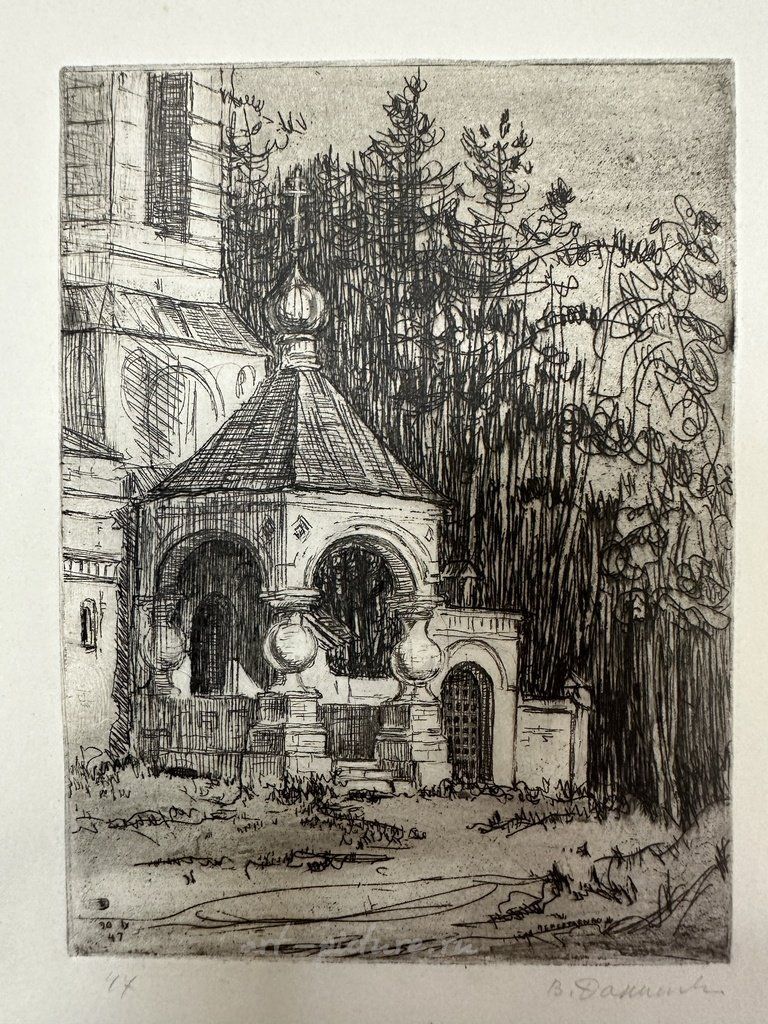
Вертикальная ориентация изображения, указывающая на устремленность вверх, позволяет нам осознать не только величие самого сооружения, но и нас, зрителей, усиливая чувство стабильности, которое излучает крепость. Таким образом, каждый элемент изображения отвечает за создание единого художественного произведения, помогающего нам, современным зрителям, ощутить то, что когда-то было в этой исторической локации.
Следует обратить внимание на деревья на переднем плане, которые не просто служат каркасом, определяющим границы нашей композиций, а становятся живыми участниками сцены. Их ветвистые кроны не только обрамляют изображение, но и создают динамичность – возможно, они слегка колышутся на ветру, усиливая этот тихий, отраженный момент спокойствия. Произведя столь тщательно подобранный контраст между твердостью и мощью крепостных стен и легкостью ветвей деревьев, художник завершает свой замысел, усиливая это примечательное взаимодействие.
Важно отметить, что общая атмосфера картины обладает ярко выраженной спокойной меланхолией, будто замороженный момент времени, придающий ей тайный, даже мистический смысл. Глубокие тени, созданные с мастерством, создают ощущение пространства и времени, что дополнительно усиливает ностальгическое впечатление. Здесь мы видим, как старинные стены, уже сгнившие от времени, все еще смотрят из своего величия на мир, пропитанный спокойствием и историей.
Некоторые критические точки зрения могли бы обратить внимание на то, что подобные исторические произведения часто лишены динамики и оставляют зрителя наедине со своей собственный интерпретацией, однако в данном случае данная работа превращается в истинное захватывающее путешествие во времени и пространстве. Это полотно, несмотря на его кажущуюся статичность, излучает дух жизни и исторического контекста, позволяя нам одновременно ощущать и мощь, и хрупкость человеческих свершений.
Все перечисленные аспекты данного произведения искусства побудили меня написать данный анализ: это восхитительное взаимодействие исторических элементов, архитектуры и природы превращает картину в полный глубинного смысла весь проект, позволяющий погрузиться в размышления о жизни, времени и о том, как хранится история в каждом камне и каждом штрихе. Это не просто картина, а настоящий памятник, который продолжает вдохновлять и восхищать.
Нельзя недооценивать значимость таких произведений искусства, которые открывают перед нами бескрайние горизонты для интерпретации и пробуждают в нас естественное желание исследовать и постигать мир через призму прошлого. Искусство, подобное этому, возвышает нас, заставляя задуматься о нашем месте в мироздании, о том, как мы можем быть частью этой бесконечной цепи событий, происходивших до нас, и как наше взаимодействие с окружением формирует новые истории, уже для будущих поколений. Смотреть на такую работу — это не только зрительное наслаждение, но и духовное путешествие, которое невозможно обесценить в своём значении и величии.
lD***br Jan. 17, 2026 18:05
Какие идеи и чувства у вас вызывает образ крепостной стены, окруженной ветвистыми деревьями? Может ли эта картина, с её спокойной меланхолией и исторической атмосферой, заставить задуматься о том, как мы воспринимаем силу и стабильность в нашем современном мире? Кажется, эта работа не просто изображает архитектуру, а приглашает зрителя путешествовать во времени, сопоставляя мощь человеческих свершений с хрупкостью природы — так где же находится та грань между величием и уязвимостью?
lI***ca Jan. 18, 2026 12:35
Образ крепостной стены, окруженной деревьями, вызывает множество идей и чувств. Во-первых, он напоминает о силе и защиты, которую символизирует такая архитектура. В то же время, ветвистые деревья, обрамляющие стену, подчеркивают хрупкость природы и её способность расти даже в условиях человеческого вмешательства. Это создает контраст между мощью рукотворного и уязвимостью естественного мира.
С точки зрения современности, такой образ заставляет задуматься о том, как мы воспринимаем устойчивость и силу в нашем мире. Мы строим высокие здания и крепкие стены, но также сталкиваемся с экологическими проблемами и изменениями климата, что подчеркивает уязвимость всего живого.
Таким образом, граница между величием и уязвимостью проявляется в том, как природа и архитектура взаимодействуют друг с другом. Это изображение действительно приглашает зрителя задуматься о длительных изменениях, времени и соотношении человеческих достижений с природой, которая всегда напоминала о своем присутствии.
Please check the payment methods with the seller when making a purchase
Delivery by agreement
Check the delivery methods with the seller when making a purchase
Approximate prices in Russia
от 180 ₽
от 180 ₽
от 180 ₽
Danilova Valentina Vasilyevna
Description
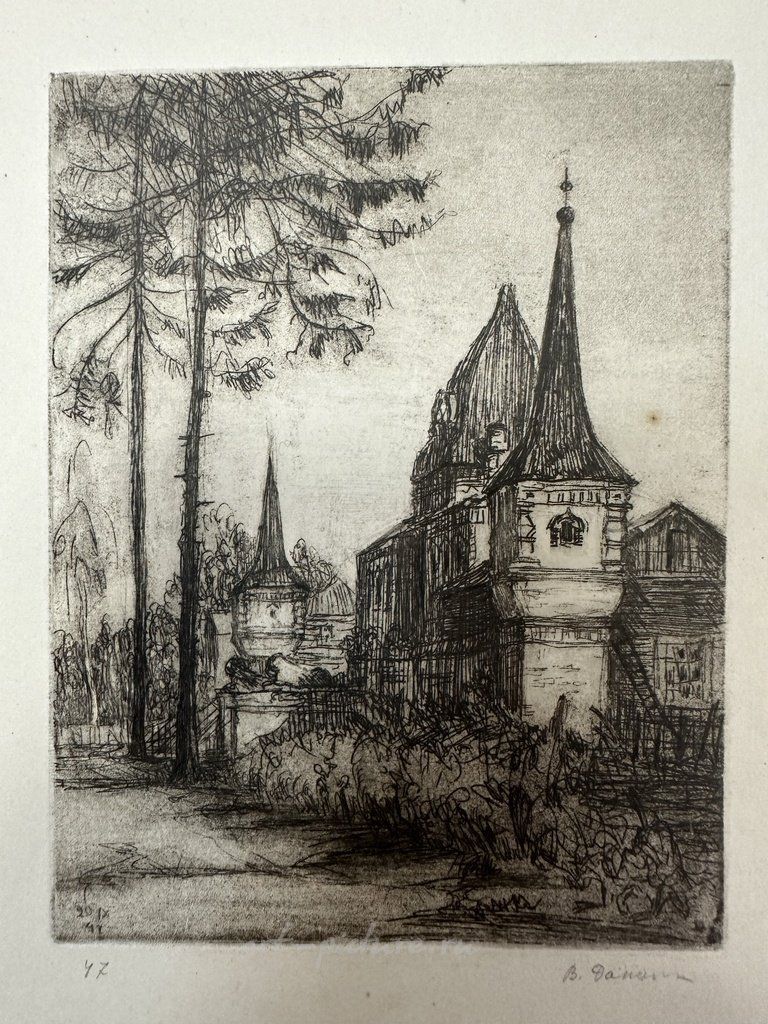
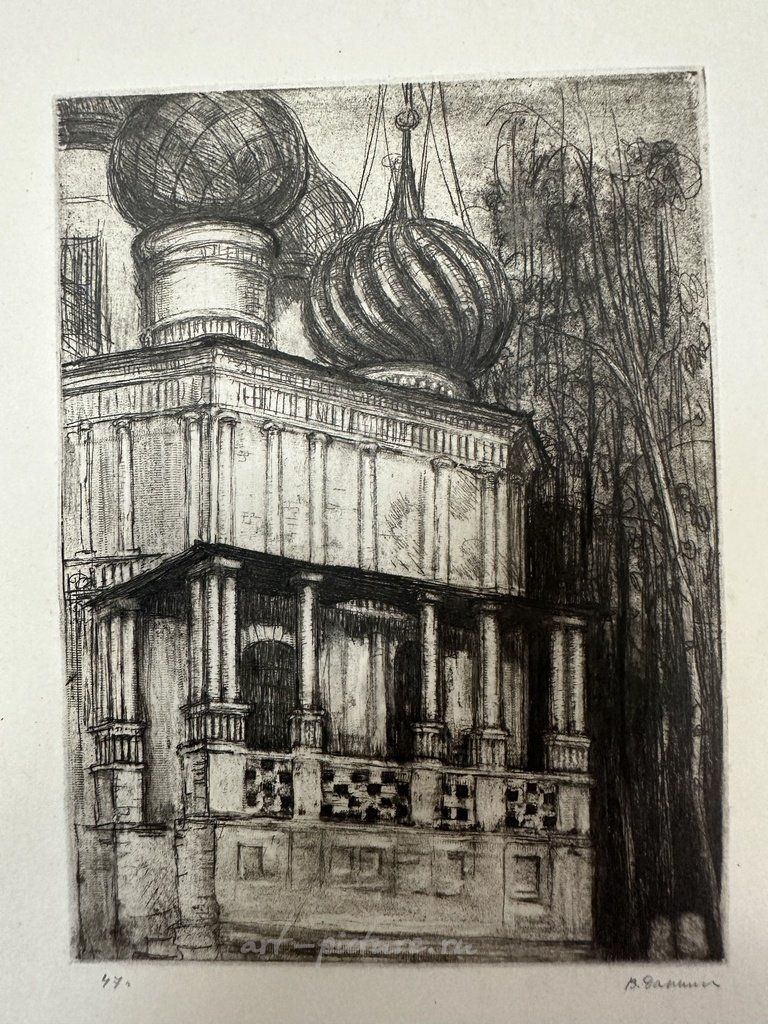
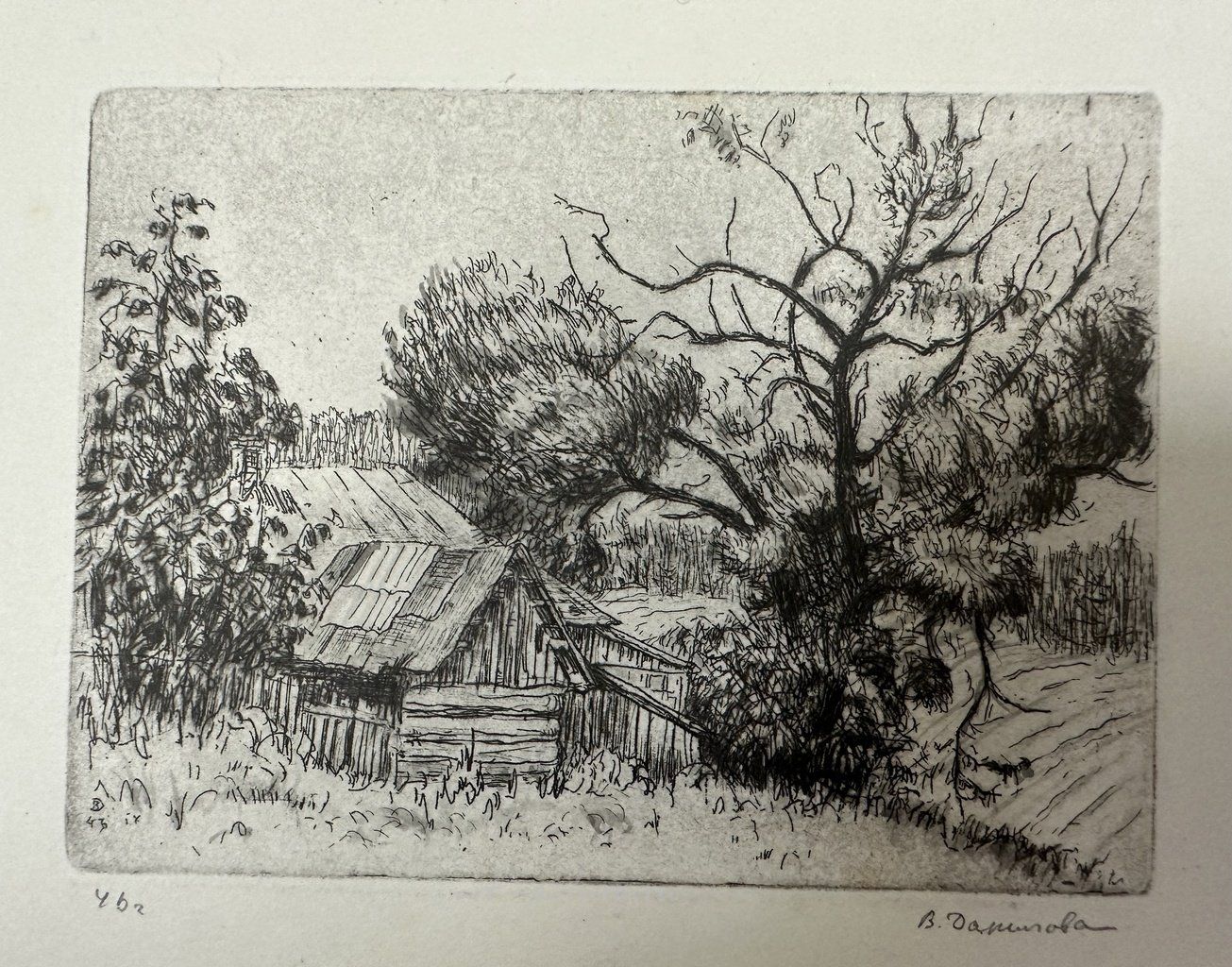
Danilova Valentina Vasilyevna (1906 - 1998). Graph. She studied in Tiflis — in the art studios of B. A. Vogel and M. I. Toidze (1920s), the Tiflis Academy of Arts (1928-1931) under E. E. Lancer, I. A. Charlemagne. She lived in Moscow. She was married to graphic artist A. O. Dmitriev. She worked mainly in the technique of etching; landscape painter, author of thematic compositions, performed ex-libris. Author of a series of engravings: "Novo-Devichy Monastery" (1942-1946), "Museum of Fine Arts" (1948), "House on Nikitskaya" (1949), "Kirghiz Suite" (1955-1957, together with A. O. Dmitriev); individual sheets (co-authored with A. O. Dmitriev): "Gogol reads the comedy "The Inspector" to the artists of the Maly Theater" (1951-1952), "The artist P. A. Fedotov in Moscow" (1952-1953), "Lenin Library in Moscow" (1956), "Chernyshevsky in exile among revolutionaries" (1962), "Gorky and Romain Rolland" (1963). Since 1931 — participant of exhibitions (1st reporting exhibition of the shock brigade of artists of SORABIS Georgia in Tiflis). Member of the Union of Artists of the USSR. Exhibited at exhibitions: "Etching exhibition. 1934-1944" (1944), All-Union Art Exhibition (1952), "N. V. Gogol in the works of Soviet artists" (1952), engravings and etchings (1953), works of graphics, sculpture and ceramics by artists of the Moscow region (1955), works of the 2nd All-Union Competition of Fine and Applied Arts of students and workers of labor reserves (1956), the 1st exhibition of etchings by Moscow artists (1956), prints of Moscow artists (1957, 1960, 1961, 1966, 1967), " Socialist Moscow in the works of Moscow artists" (1957), "Monuments of Ancient Russian architecture in the works of Moscow artists" (1966), "Monuments of the history and culture of our Motherland in the works of Moscow artists" (1968) in Moscow; an exhibition dedicated to N. V. Gogol (1952), etchings (1958) in Leningrad; a traveling exhibition of works by Soviet artists (1953, Nebit-Dagh, Yerevan, Grozny, Stavropol, Krasnodar, collective farms of Transcaucasia and Kuban); engravings and etchings in Riga (1954) and others. Participated in a number of exhibitions of Soviet art abroad: in Warsaw (1946), Damascus, Beirut, Cairo (1955, mobile), Sofia and Bucharest (1956, mobile). She held solo exhibitions in Moscow (1944, 1947, together with A. O. Dmitriev). Creativity is represented in the Pushkin State Museum of Fine Arts, the Udmurt Republican Museum of Fine Arts, the Irkutsk Regional Art Museum named after V. P. Sukachev, the Chuvash State Art Museum, the State Museum of Arts of Kazakhstan named after A. Kasteev in Alma-Ata and others.BiographyDanilova Valentina Vasilyevna was born in St. Petersburg. Her father, a military engineer, participated in the construction of the Georgian Military Road and died in 1919 from a typhus epidemic raging at that time. Valentina and her mother, left without a breadwinner, happened to be in Sukhum and, taking advantage of the hospitality of Alexey Evdokimovich Dmitriev, lived in his house for many years. Her childhood and youth years were spent here. When choosing a profession, the grown-up Valentina could not decide for a long time what she would do in her future life, architecture, or art. The latter won, but the theme of architecture is present in her work.In the 20s, Valentina Danilova studied at the Tiflis art studios of B. A. Vogel and M. I. Toidze, in 1928 she entered the Tiflis Academy of Arts under the direction of E. E. Lancere and N. A. Charlemagne. The first exhibition of her works took place in 1931, in Tiflis.In the early thirties, Valentina Danilova moved to Moscow and her whole life was spent here; she became a member of the Moscow Art Museum, joined the Union of Artists of the USSR, participated in exhibitions. Her works have been exhibited in the capital and abroad: in Poland, Bulgaria, Romania, in the countries of the Middle East. She also participated in small traveling exhibitions in factories, villages, collective farms, sparsely populated cities.The creative heritage of Danilova Valentina Vasilyevna is kept in the Pushkin State Museum of Fine Arts, the Chuvash State Art Museum, the Udmurt Republican Museum of Fine Arts, the State Museum of Kazakhstan, the Solikamsk Museum of Local Lore.In the late thirties, Valentina Vasilyevna was in charge of the art department of the State Historical Museum. In 1945, due to moving to the Moscow region, she had to give up this job.Danilova is a landscape painter, portraitist, animalist, but architecture occupies a special place in her work.In 1966 she participated in the exhibition "Monuments of ancient Russian architecture in the works of Moscow artists", in 1968 – in the exhibition "Monuments of history and culture of our Motherland in the works of Moscow artists".The main direction of Danilova's work is etchings. They differ in various types of manufacturing techniques: dry needle, bar-aquatint, tinted etching, linocut.In a joint work with Oleg Dmitriev, Valentina Danilova's talent was revealed in a new way, she became the author of thematic compositions in paintings made by Dmitriev's brush.Pencil drawings have been preserved in the archive of Danilova. These are variations of sketches of thematic compositions, beetles, butterflies, flowers, animals.In the seventies and eighties, Danilova became interested in another type of graphic art, ex-libris.In more detail.In the first years after moving to Moscow, Valentina Danilova lived with her mother in a small room of the Novodevichy Monastery. In 1936, she entered into a legal marriage with Oleg Dmitriev, a student of the Moscow Art School in memory of 1905. In the autumn of 1941, Oleg, already a student at the Institute of Fine Arts, evacuated to Samarkand. Valentina stayed in Moscow, lived with her mother in the Novodevichy Monastery, and at night extinguished the "lighters" on the roof. In 1945, the Novodevichy Monastery, by order of the Council of People's Commissars of the USSR, was placed at the disposal of the Theological Institute. Everyone who was not related to this organization has now become "outsiders" and had to vacate the occupied premises.The family found a new home in Malakhovka. Here, in a rented apartment, Valentina Danilova and Oleg Dmitriev began working together on a big topic about the life and work of outstanding figures of the nineteenth century: musicians, artists, artists, writers, revolutionaries. In this creative union, Danilova worked on creating thematic compositions, while achieving the most plausible setting and environment of the main character. Among the paintings in this series, the most famous are large-scale canvases: "Gogol reads the comedy "The Inspector", "The Artist Fedotov in Moscow", "Chernyshevsky in exile".The artists have been working on this topic for more than seventeen years. But Danilova had many other interesting events during these years.In 1951, she and Oleg Alekseevich began a series of trips across the water expanses of Russia on the yacht Phoenix. The owner of the yacht was Viktor Fedorovich Bolkhovitinov, aircraft designer, major General of the aviation troops of the Soviet Union. He built the yacht with his own hands, that's why he called it "Phoenix". Valentina Vasilyevna and Oleg Alekseevich met Viktor Fedorovich and his wife, Natalia Sergeevna, shortly after the war. Warm, friendly relations between the families have been preserved all their lives. The last, short sailing on the yacht was in the summer of 1968, and on January 30, 1970, Viktor Fedorovich died.The works made under the impression of these trips, Valentina Vasilyevna united under the title "Across the water expanses of Russia on the yacht "Phoenix".In 1955, Valentina and Oleg were lucky to take part in an ethnographic expedition in Kyrgyzstan. A series of works created during a trip in extreme conditions, Valentina Vasilyevna called the "Kyrgyz Suite".Artists often spent the winter in the boarding house "Tarusa". They had all the conditions here for recreation and creativity in comfortable conditions. But the most severe frosts could not make Valentina Vasilyevna refuse to work in the open air. She combined a series of frosty landscapes under the name "Tarusa".And Valentina Vasilyevna and Oleg Alekseevich often spent the "golden autumn" in Sukhumi, visiting Leonid, Oleg's brother. Valentina collected pencil drawings of flowers, plants, beetles, and animals in a folder called "Sukhum".The series "Shelter of tranquility, works and inspiration" was made under the impression of pilgrimage trips to Pushkin places.In the mid-seventies, after retirement, Valentina Vasilyevna and Oleg Alekseevich participated for many years in the improvement of the art department at the Solikamsk Museum of Local Lore. They gave him more than three hundred of their best works. "For the contribution to the creation of the art fund of the Museum of Local Lore, active activity in the aesthetic education of the workers of Solikamsk," Valentina Vasilyevna and Oleg Alekseevich were awarded the title of Honorary Citizen of Solikamsk by the city administration.Valentina Vasilyevna died on June 17, 1998.
Additional articles
The translation of "Крепостная стена" into English is "fortification wall" or "castle wall."
Etching (fr. eau forte – strong water) is a type of engraving made on metal by etching with nitric acid (for iron) or ferric chloride (for copper). A kind of gravure printing. A special primer (etching varnish) resistant to acids is applied to a polished metal plate (zinc, steel, copper) . Next, a drawing is scratched on the "board" with a special engraving needle. The reverse side of the plate is protected from the reagent by bitumen varnish. After that, it is placed in acid for etching. At the same time, indentations appear in the scratched places . From time to time, the plate is removed to dry and cover part of the image with varnish, and then again placed in the reagent. By changing the time the "board" is in acid, the depth of the etched contours is adjusted. After the etching process is completed, the varnish is removed using a solvent. Next , the plate is coated with a dye and wiped. The result is a ready-to -print "board". This method, as you can see, is easier than those, which are used for carved metal engraving or woodcut ( woodcut). If necessary, strokes of different widths and depths can be obtained, which makes it possible to perform the most detailed image, practically without spending any effort, since acid takes over the main work . The method described above is called "etched stroke" and is considered the most common. Initially , the engravings were made only in this way. However , other etching techniques have been invented at various times. • Soft varnish is a method that appeared in the XVIII century. Allows you to get a freer and lighter stroke, not as sharp dry as when using a needle. The plate is covered with a soft etching varnish, which allows the use of a sufficiently weak acid. Next, paper is superimposed on it, on which a drawing is made with a pencil. At the same time, the master can use a hard or soft pencil, as well as change the pressure force. As a result, the varnish in the places of the contour of the image sticks to the paper from the reverse side. This technique is the fastest. • Aquatinta (fr. aquatinta – colored water). Invented in 1760 in France by Jean-Baptiste Leprance. When performing engravings, the plate is partially covered with rosin and placed in acid. Then it is removed and partially covered with acid-resistant composition again. The technique allows you to create tonal planes of a large range. It is considered the most common way of performing tone in etching. • Lavis (fr. lavis – shading). Also invented by Leprance in the XVII century. On a polished surface, covered with with aquatint, a drawing is applied with an etching compound, which includes a strong 40% acid and a coloring agent that allows you to see the drawing in the contours and determine it by the depth of tone. Drawing is done with watercolor brushes or fiberglass brushes. The thicker the etching compound is laid, the deeper the strength of the tone. Drawing is free, without the need for acid-resistant varnish coating, which eliminates the appearance of hard borders on the impression of tone spots. With high-quality printing, a print run creates a complete impression of a unique watercolor drawing. The substitution of one graphic technique for another is not always indisputable, and artists working in this manner use different methods of applying a rosin layer in order to obtain a different texture, which gives the impression originality and leads to undeniable artistic results. In the end, modern lavis is very close to aquatint in its external visual characteristics, but differs from it in the watercolor of the tonal spot, the softness and blurriness of the outlines of the drawing strokes. Just like aquatint, lavis is used in combination with other etching techniques, for example, with a dry needle. The technique requires special care and allows you to get a limited number of prints. • Reservation (fr. reservation – saving). The method was invented by the Frenchman F. Gillot in the 1850s. Drawing on metal is made by means of ink mixed with sugar, applied with a brush. Then the plate is covered with etching varnish and placed in warm water. As a result, the ink swells and raises the varnish particles. The acid - resistant composition is not difficult at the same time delete in places of contours. The "board" prepared in this way is lowered into the acid in the usual way. Finished prints resemble brush sketches. • Mezzotint (ital. mezzo tinto – moderate tinting). The technique was invented by the German Ludwig von Siegen in 1642. Another name is "English manner" or "black manner". The drawing on the plate processed by a special method is performed by highlighting individual sections. A special rocking tool is used to process the board. The drawing is applied using a triangular scraper. The technique allows you to transmit a picturesque manner and imitates a brushstroke. For the first time, the technique of engraving by etching with acid was used by the Augsburg master Daniel Hopfer in 1501. Around the same time, another artist, Albrecht Durer, performs six etchings using a steel board. The most famous of the first engravings of this master is considered to be the "Big Cannon". These engravers used steel plates. However, already in the first half of the XV century , the techniques of etching on copper became known, after which this metal for a long time time becomes the main one used for engraving. As an art form, etching reaches its heyday only in the XVII century. At this time, this technique is actively used mainly by French, Italian and Dutch masters. In Holland, this type of drawing is equated even with real painting. A great contribution to the development of etching and its exceptional recognition was made by Rembrandt Harmens van Rijn (1606-1669). The works of this master are still considered unsurpassed examples of graphic art. At the same time as Rembrandt, such masters as Me work in the etching technique. Livens, A. Ostade, K. Bega, E. Velde and many others. It is particularly worth noting the portrait engravings made by etching, by A. van Dyck. Along with these masters , Zh . also contributes to the development of etching . Callo, one of the most famous engravers today, who has completed more than one and a half thousand works in this technique. The modern technique of engraving of this type is distinguished by an extraordinary variety of manners. Artists are constantly improving it and experimenting, creating more and more new methods. Etching (translated from the French "strong water") is a kind of printed graphics. The technique involves creating a pattern on a metal surface by etching lines and other elements of the image with nitrous acid, after which paint is applied to the printing plate and special paper is applied. The durability of the metal makes it possible to repeat the printing process an infinite number of times. For centuries, etching has been actively used by European masters to create illustrations and independent works of art.HISTORY OF THE INVENTION OF TECHNOLOGYThe first etchings were made at the beginning of the XVI century. The new technique became an alternative to the traditional engraving, which was made with the help of incisors. The know-how was a real breakthrough: now the master worked only with a layer of acid-resistant varnish applied to the surface of a metal board, and nitrous acid did the rest for him. The use of new technology enabled engravers to create complex images in large print runs.According to the text of the noble charter of Emperor Rudolf II, The author of the first etchings was Daniel Hopfer from Augsburg. He owns a whole series of printed graphics (portraits, landscapes, mythological and religious subjects). Hopfer's work was recognized by his contemporaries, so even during the master's lifetime, etchings became collectibles. After the first successes of the new technology, it was adopted by Albrecht Durer. He created many works on metal and copper plates, famous for their compositional perfection and careful elaboration of details.In parallel with the German engravers , the etching technique was developed and in other European countries. In Holland , the greatest successes were achieved by X. Segers, p. Potter and Rembrandt. Here etching was used both when creating portraits of aristocrats and printing panoramas of the countryside to decorate the houses of merchants. In Italy , the technique was mastered by the masters of urban landscape J. B. Tiepolo, J. B. Piranesi. With its help, they created a large print run of Veduta pictures depicting architectural panoramas of Venice and other cities. The artistic value of such creativity was not high, but tourists willingly bought them as souvenirs.Etching received a new impetus to the development after the emergence of Impressionism. The possibilities of the etched stroke technique were highly appreciated by O. Renoir, Claude Monet, Edouard Manet and others. Separately , we should also mention the English engraver W. Blake. He managed to give the printed images even greater depth and expressiveness thanks to a combination of the principles of deep and high printing, as well as post-printing coloring of sheets. Since the twentieth century, etching has been giving way other types of printing, increasingly becoming a curiosity. Today it is used together with other techniques to create original works of art.ETCHING TECHNIQUEA copper or zinc plate is used as a blank for the printing plate . First, it is leveled, eliminating all irregularities. Then the surface is covered with a layer of acid-resistant varnish. On the surface, the engraver makes a drawing and scratches it out with needles. The thicker the line should be, the deeper you need to scratch the stroke. After that, the workpiece is placed in a bath with nitric acid and wait for several hours until it etches the metal in the places of scratches. To create complex compositions, the process of varnishing and etching can be repeated several times.At the final stage of preparation of the printed form, its surface is cleaned of varnish and dried. After that, using a squeegee , special ink is applied to the surface of the plate, and then it is covered with etching paper. The printed sheet is carefully removed and dried. The process can be repeated an infinite number of times, but it should be remembered that each new the print will be slightly different from the previous ones. In the art market , the first printed copy from a new form is most appreciated.FAMOUS MASTERS OF ETCHINGMass fascination with technology was observed until the invention of more modern methods of printmaking based on the use of new materials. Despite this, even in the twentieth century, famous artists continued to create etchings.Pablo PicassoThe famous Spanish artist was famous for his love of experimenting with various techniques of fine art. Not surprising, that in his creative heritage you can find a lot of interesting engravings made in the etching technique. An idea of the master's style is given to us by one of his engravings entitled "A Woman with a tambourine" (1939). Picasso's work in the Nude style clearly traces the influence of the artistic principles of Cubism and Surrealism. Etching has become another milestone in the creative path of the master.Edgar DegasEven in the technique of etching, the artist remained faithful to the principles of impressionism. This feature of Degas' style is most vividly illustrated by the engraving "Portrait of Marguerite de Ga" (1865). Thanks to the etching of cross strokes the master managed to create the effect of the depth of space and enhance the contrast between the dark background and the bright face of a young girl. In the etched stroke technique Degas created portraits and landscapes.Francisco GoyaWith the help of gravure printing, Goya created a series of interesting works called "Caprichos". It included about 80 engravings, printed no later than 1799. With the help of fantasy plots and creatures, Goya invites the viewer to reflect on the paradoxes and bizarre twists of the human lives. The engravings bear the imprint of the artist's gloomy worldview.Albrecht DurerThe German master worked out every detail of the print with special care. The result of his efforts were hundreds of magnificent engravings on religious and secular subjects. The idea of Durer as an engraver is given by a series of works called "Apocalypse". It included 15 large sheets with images and texts on the reverse side. The choice of subjects was not accidental for Durer. Apocalyptic stories were very popular in Germany XV-XVI centuries. in connection with the political fragmentation and social instability of the German principalities.RembrandtEtchings for Rembrandt became the love of his life. In addition to his works, he also collected engravings by other masters. The fanaticism with which the artist approached art classes did not allow him to present etchings to the public, which, in his opinion, were far from perfect. Because of this, he could alter the printed form many times, carefully working through each stroke. For example, above the etching "Christ healing the sick (A sheet of one hundred guilders) " the master worked for 7 years. To date , 289 works by Rembrandt are known.William BlakeThe author of the technique of relief etching in the eyes of his contemporaries looked like an eccentric romantic. But this unfortunate circumstance did not interfere Blake to devote himself to engravings with an intricate plot. With great patience and care, the master worked through every detail. Blake's efforts were rewarded with stunning engravings in their depth and quality, as far away from the print mainstream as possible. Blake used his knowledge and skills to creating an author's book. Printed in it were not only images, but also texts. To enhance the expressiveness, the prints were additionally painted with watercolor paints. After Blake , other artists began to create their own books.





Ваше описание картины действительно погружает в атмосферу исторической глубины и романтики. Как эколог, не могу не отметить, что выбор материалов и технологий, используемых в данном произведении искусства, также имеет важное значение с точки зрения устойчивости и воздействия на окружающую среду. Техника офорта, как вы упомянули, предполагает использование медной пластины и химикатов для гравировки. Это может вызывать определенные экологические опасения из-за возможного воздействия химикатов на окружающую среду. Тем не менее, современное искусство активно используется альтернативные методы и экологически безопасные химикаты, что позволяет минимизировать вредное воздействие на природу.
Что касается архитектурного аспекта, изображённая крепость, как символ устойчивости и надежды, действительно вызывает чувства, подобные тем, что испытывают многие, кто знает историю и значение таких строений. Они служили не только архитектурными объектами, но и важными сообществами, которые способствовали социальной и культурной динамике. Однако, с экологической точки зрения, подобные сооружения часто также оказывают давление на природные ресурсы. Важно помнить, что долгосрочная устойчивость подразумевает не только сохранение культурного наследия, но и бережное отношение к природным экосистемам.
Деревья, описанные вами на переднем плане, являются важным элементом экосистемы. Их присутствие не только добавляет эстетическую ценность изображению, но и акцентирует внимание на роли растительности в поддержании биоразнообразия. Это также служит напоминанием о том, что подобные природные элементы должны защищаться и сохраняться. Я всегда восхищаюсь тем, как природа гармонично вписывается в произведения искусства, создавая уникальные опыты для наблюдателей.
Ваше упоминание о меланхолии и затишье, пронизывающее всю работу, открывает интересные размышления о времени и его влиянии на окружающую среду. Не только стены крепости, но и деревья рассказывают историю — каждое из этих существ имеет свой жизненный цикл и значение в контексте изменения окружающей среды.
Частично заметные недостатки, которые могли бы быть упомянуты критиками, также актуальны. Например, статичность изображения действительно может привести к изоляции зрителя от динамики природного мира. Однако такая тишина и загадка вносят свои нюансы; они позволяют задуматься о времени, проходящем настолько быстро, что мы порой забываем о жизненных циклах, которые происходят вокруг нас.
Как эколог, я рекомендую учитывать, как данное произведение искусства может служить инструментом для просвещения о важности защиты окружающей среды. Создание искусства должно идти рука об руку с заботой о природе — это может включать использование переработанных материалов, устойчивых методов или даже вовлеченность в проекты сохранения.
Искусство как таковое действительно может вдохновлять, и такие произведения, как представленное вами, должны служить мотивацией для нас, чтобы мы продолжали исследовать, воспринимать и заботиться о нашем мире. Они напоминают нам, что каждое наше взаимодействие с окружающей природой формирует новую историю, и это достойно внимания и уважения.
С уже упомянутой картиной, изображающей массивные крепостные стены, окруженные роскошными деревьями с ветвистыми кронами, действительно трудно не восхититься величием и глубиной её исполнения. Созданная в технике офорта, работа пленяет своим реализованным мастерством, позволяющим зрителю печатать на внутреннем взоре не только саму архитектурную форму крепости, но и всю атмосферу старинного времени, включающую в себя легкий налёт романтики и мистики.
Архитектурная структура в фоновом плане, с её внушительными стенами и арками, является символом силы и надежды, несомненно, служила не только оборонительным сооружением, но и средоточием жизни и культуры, где переплетались судьбы людей, что, бесспорно, вызывает интерес и желание узнать историю этого места. Стены, изображенные с тонкими штрихами и глубокими тенями, становятся практически живыми, будто сами рассказывают об их испытаниях. Даже образы, изображенные с помощью линий, словно воображение художника продолжает их жизнь, что подчеркивает природа каждого штриха и особенности данной техники.
Вертикальная ориентация изображения, указывающая на устремленность вверх, позволяет нам осознать не только величие самого сооружения, но и нас, зрителей, усиливая чувство стабильности, которое излучает крепость. Таким образом, каждый элемент изображения отвечает за создание единого художественного произведения, помогающего нам, современным зрителям, ощутить то, что когда-то было в этой исторической локации.
Следует обратить внимание на деревья на переднем плане, которые не просто служат каркасом, определяющим границы нашей композиций, а становятся живыми участниками сцены. Их ветвистые кроны не только обрамляют изображение, но и создают динамичность – возможно, они слегка колышутся на ветру, усиливая этот тихий, отраженный момент спокойствия. Произведя столь тщательно подобранный контраст между твердостью и мощью крепостных стен и легкостью ветвей деревьев, художник завершает свой замысел, усиливая это примечательное взаимодействие.
Важно отметить, что общая атмосфера картины обладает ярко выраженной спокойной меланхолией, будто замороженный момент времени, придающий ей тайный, даже мистический смысл. Глубокие тени, созданные с мастерством, создают ощущение пространства и времени, что дополнительно усиливает ностальгическое впечатление. Здесь мы видим, как старинные стены, уже сгнившие от времени, все еще смотрят из своего величия на мир, пропитанный спокойствием и историей.
Некоторые критические точки зрения могли бы обратить внимание на то, что подобные исторические произведения часто лишены динамики и оставляют зрителя наедине со своей собственный интерпретацией, однако в данном случае данная работа превращается в истинное захватывающее путешествие во времени и пространстве. Это полотно, несмотря на его кажущуюся статичность, излучает дух жизни и исторического контекста, позволяя нам одновременно ощущать и мощь, и хрупкость человеческих свершений.
Все перечисленные аспекты данного произведения искусства побудили меня написать данный анализ: это восхитительное взаимодействие исторических элементов, архитектуры и природы превращает картину в полный глубинного смысла весь проект, позволяющий погрузиться в размышления о жизни, времени и о том, как хранится история в каждом камне и каждом штрихе. Это не просто картина, а настоящий памятник, который продолжает вдохновлять и восхищать.
Нельзя недооценивать значимость таких произведений искусства, которые открывают перед нами бескрайние горизонты для интерпретации и пробуждают в нас естественное желание исследовать и постигать мир через призму прошлого. Искусство, подобное этому, возвышает нас, заставляя задуматься о нашем месте в мироздании, о том, как мы можем быть частью этой бесконечной цепи событий, происходивших до нас, и как наше взаимодействие с окружением формирует новые истории, уже для будущих поколений. Смотреть на такую работу — это не только зрительное наслаждение, но и духовное путешествие, которое невозможно обесценить в своём значении и величии.
Какие идеи и чувства у вас вызывает образ крепостной стены, окруженной ветвистыми деревьями? Может ли эта картина, с её спокойной меланхолией и исторической атмосферой, заставить задуматься о том, как мы воспринимаем силу и стабильность в нашем современном мире? Кажется, эта работа не просто изображает архитектуру, а приглашает зрителя путешествовать во времени, сопоставляя мощь человеческих свершений с хрупкостью природы — так где же находится та грань между величием и уязвимостью?
Образ крепостной стены, окруженной деревьями, вызывает множество идей и чувств. Во-первых, он напоминает о силе и защиты, которую символизирует такая архитектура. В то же время, ветвистые деревья, обрамляющие стену, подчеркивают хрупкость природы и её способность расти даже в условиях человеческого вмешательства. Это создает контраст между мощью рукотворного и уязвимостью естественного мира.
С точки зрения современности, такой образ заставляет задуматься о том, как мы воспринимаем устойчивость и силу в нашем мире. Мы строим высокие здания и крепкие стены, но также сталкиваемся с экологическими проблемами и изменениями климата, что подчеркивает уязвимость всего живого.
Таким образом, граница между величием и уязвимостью проявляется в том, как природа и архитектура взаимодействуют друг с другом. Это изображение действительно приглашает зрителя задуматься о длительных изменениях, времени и соотношении человеческих достижений с природой, которая всегда напоминала о своем присутствии.